Role

UX Designer

Tmeline

January 2026-Present

Tools

Figma

Nudge

Real-Time Networking Platform with Availability-Based Matching and Intent Signaling
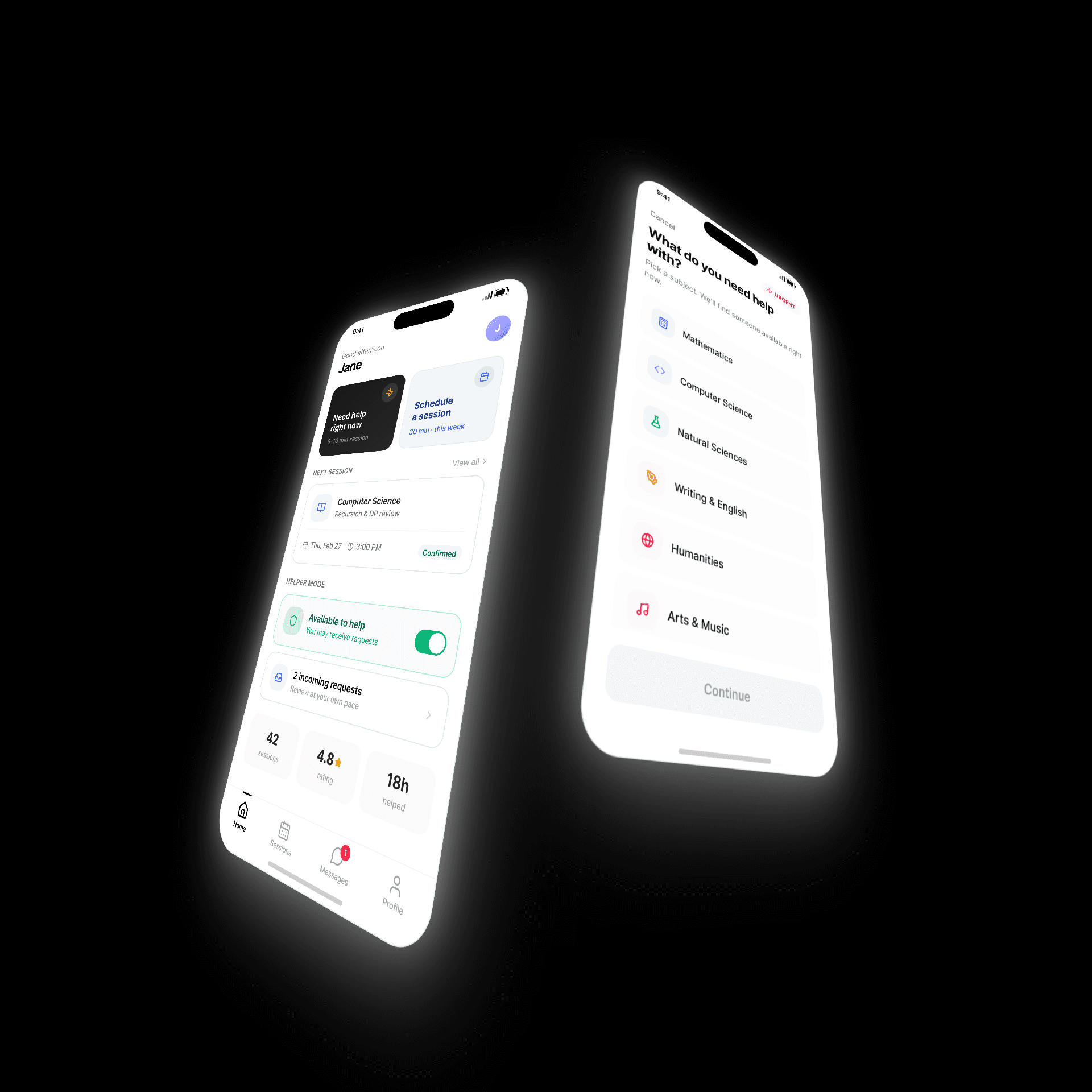
Main Project Image

The Project

Nudge is a mobile networking platform designed to enable low-pressure, real-time interactions based on user availability and intent. Unlike traditional networking platforms that prioritize static profiles and long-term connections, Nudge focuses on moment-based interactions, helping users connect when it actually makes sense.

The Problem

Users don’t struggle to meet people, they struggle to find the right people at the right moment.

The Outcome

A real-time networking platform that enables:

  • availability-based interaction

  • intent-driven connections

  • low-friction, contextual engagement

My Role & Teamwork

I designed the product experience from early concept to high-fidelity UI, including:

  • user flows and interaction models

  • wireframes and prototypes

  • design system and component library

I collaborated with a cross-functional team to align design decisions with product direction and technical feasibility.

The Problem Space

I designed the product experience from early concept to high-fidelity UI, including:

  • user flows and interaction models

  • wireframes and prototypes

  • design system and component library

I collaborated with a cross-functional team to align design decisions with product direction and technical feasibility.
Research & Planning

I designed the product experience from early concept to high-fidelity UI, including:

  • user flows and interaction models

  • wireframes and prototypes

  • design system and component library

I collaborated with a cross-functional team to align design decisions with product direction and technical feasibility.

User Flows

I designed the product experience from early concept to high-fidelity UI, including:

  • user flows and interaction models

  • wireframes and prototypes

  • design system and component library

I collaborated with a cross-functional team to align design decisions with product direction and technical feasibility.

UX Heuristic:
Visibility of System Status + Recognition Rather Than Recall

UX Heuristic:
Visibility of System Status + Recognition Rather Than Recall

UX Heuristic:
Visibility of System Status + Recognition Rather Than Recall

I designed the product experience from early concept to high-fidelity UI, including:

  • user flows and interaction models

  • wireframes and prototypes

  • design system and component library

I collaborated with a cross-functional team to align design decisions with product direction and technical feasibility.
Feature Definitions & Low Fidelity

I designed the product experience from early concept to high-fidelity UI, including:

  • user flows and interaction models

  • wireframes and prototypes

  • design system and component library

I collaborated with a cross-functional team to align design decisions with product direction and technical feasibility.

Large Project Gallery Image #1
Large Project Gallery Image #2
Project Gallery Image for 50% width of the screen #1
Project Gallery Image for 50% width of the screen #2
Project Gallery Image for 50% width of the screen #1

Final Takeaways

Designing Nudge reinforced how important it is to reduce friction in everyday interactions. Many collaboration platforms focus on messaging systems or formal networking, but the real challenge was designing for a specific moment: when someone needs help and wants to ask quickly without feeling like they are interrupting someone. Through iterative prototyping, I learned how small design decisions around visibility, availability signals, and user intent can shape how comfortable users feel initiating a connection. Prioritizing clarity and immediacy helped create an experience where interactions feel lightweight rather than transactional. If I were to continue developing Nudge, I would focus on validating the design through user testing and measuring how effectively the platform reduces hesitation when asking for help. Additional exploration around trust signals, notification timing, and response expectations could further improve the experience.

  • The image featured in the carousel #1
  • The image featured in the carousel #2
  • The image featured in the carousel #3
  • The image featured in the carousel #4
  • The image featured in the carousel #1
  • The image featured in the carousel #2
  • The image featured in the carousel #3
  • The image featured in the carousel #4
  • The image featured in the carousel #1
  • The image featured in the carousel #2
  • The image featured in the carousel #3
  • The image featured in the carousel #4

@2025 Grace Oh

Currently taking Graphic Systems, designing an app that connects people nearby to solve immediate problems in real time, and learning animation and motion graphics (Adobe Animate + AfterEffects) 😊

@2025 Grace Oh

Currently taking Graphic Systems, designing an app that connects people nearby to solve immediate problems in real time, and learning animation and motion graphics (Adobe Animate + AfterEffects) 😊

@2025 Grace Oh

Currently taking Graphic Systems, designing an app that connects people nearby to solve immediate problems in real time, and learning animation and motion graphics (Adobe Animate + AfterEffects) 😊